
Hormones and Skin Health: The Skin–Endocrine Connection
We tend to think of skin as a passive wrapper — a barrier that keeps the inside in and the outside out. In reality, skin is one of the body's largest and most active endocrine organs. It both responds to hormones and produces them. That is why hormonal shifts show up so visibly on the surface.
Skin as an endocrine organ
Skin cells carry receptors for a wide range of hormones. They also synthesise and convert hormones locally. That two-way relationship means the skin is in constant dialogue with the endocrine system — not merely receiving its instructions.
How key hormones shape the skin
- Oestrogens support collagen density, hydration, and wound healing — which is why declining levels are linked with thinner, drier skin.
- Androgens regulate sebum (oil) production, influencing acne and skin texture.
- Cortisol, the stress hormone, can impair the skin barrier and slow repair when chronically elevated.
- Thyroid hormones affect skin moisture, temperature, and the pace of cell turnover.
Hormones and skin ageing
Much of what we recognise as skin ageing is downstream of hormonal change. As oestrogen falls around menopause, collagen loss accelerates. The skin's ability to retain moisture and repair itself also diminishes. Understanding these mechanisms reframes skincare: the surface and the system are connected.
Treating the skin without considering the endocrine system is like adjusting a thermostat without checking the furnace.
Why a systems view helps
Viewing skin through an endocrine lens opens up better questions — about hydration, repair, and the regenerative potential of the skin–hormone axis. It is a fast-growing field at the intersection of dermatology and endocrinology.
Life stages where the connection is most visible
The skin–endocrine dialogue is loudest at moments of hormonal transition. Puberty raises androgens and with them sebum production — the biology behind teenage acne. Pregnancy shifts oestrogen and melanocyte-stimulating hormone, producing pigment changes many women notice. Perimenopause brings the steepest shift: studies suggest skin loses up to 30% of its collagen in the first five years after menopause — faster than chronological ageing alone would predict.
Thyroid disease shows the connection in the other direction. Dry, cool, coarse skin is a classic sign of an underactive thyroid; warm, moist skin can signal an overactive one. Dermatologists are sometimes the first clinicians to suspect an endocrine diagnosis — because the skin reports on the system.
What this means practically
- Persistent adult acne, especially along the jawline, can be a signal to think about androgens — not just a topical problem.
- A sudden change in skin dryness, texture, or hair shedding is worth discussing with a clinician before buying more skincare.
- Skin changes around menopause respond best to strategies that acknowledge the hormonal driver, not only the surface symptom.
- Chronic stress is a skin issue: sustained cortisol measurably slows barrier repair and wound healing.
Learn the clinical picture
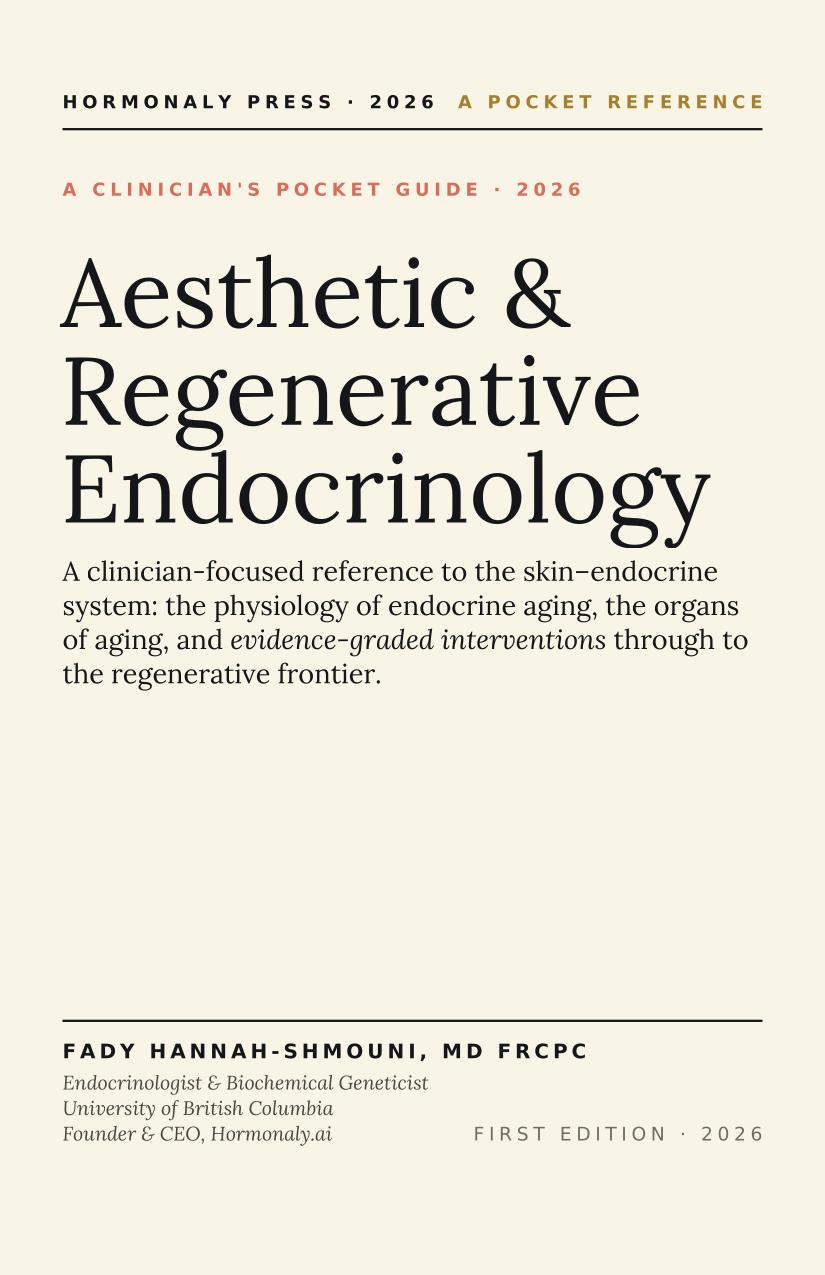
Want the clinician's view of the skin–endocrine system — concise, practical, and evidence-based? Our pocket guide to aesthetic and regenerative endocrinology was written for exactly this.
This article is for general education and is not medical advice. Speak with a qualified healthcare professional before making decisions about your health, medications, or supplements.