
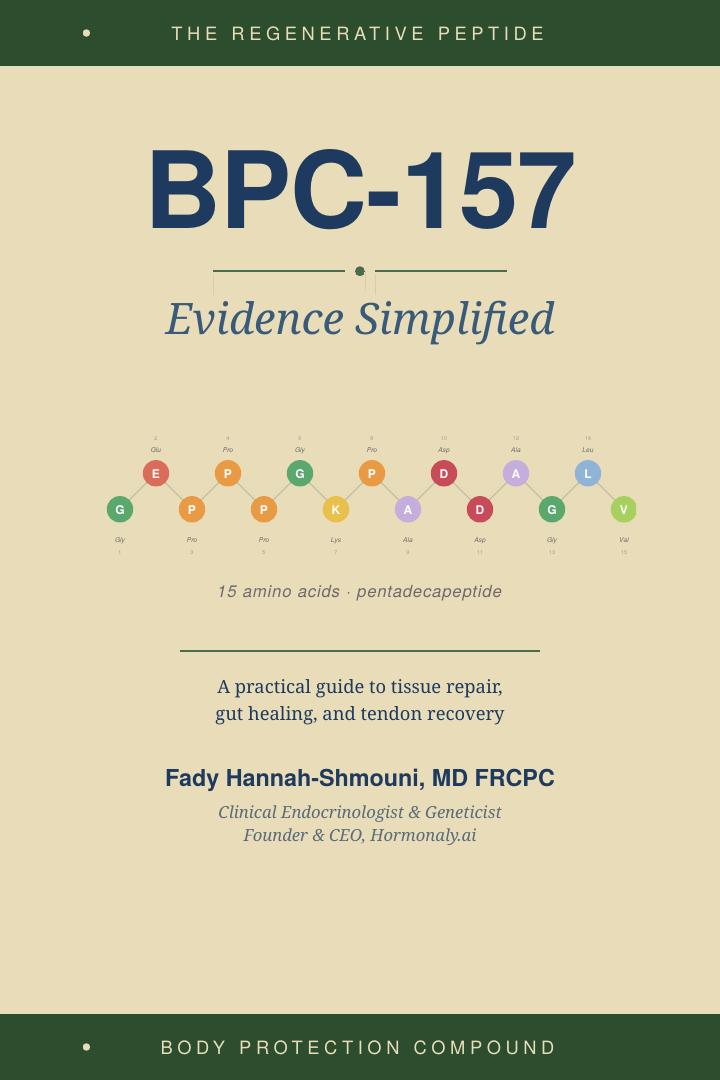
Fady Hannah-Shmouni, MD FRCPC
BPC-157: Evidence Simplified
The regenerative peptide — a practical guide to tissue repair, gut healing, and tendon recovery
About this guide
BPC-157 is one of the most searched-for peptides in regenerative medicine — and one of the most misunderstood. Most of what circulates online is either forum anecdote or marketing copy. This guide takes a different approach. It walks through the actual published evidence, study by study, and separates what animal models have shown from what has (or has not) been demonstrated in humans.
The pharmacology is explained in plain language. You will learn how a fifteen-amino-acid gastric protein fragment came to be studied for tendon healing, gut mucosal repair, and vascular effects. The proposed mechanisms — angiogenesis modulation, growth-factor signaling, the gut–brain axis — are covered in depth. So is where the evidence is thin: regulatory status, the absence of large human trials, and quality-control problems in the gray-market supply chain.
The result is a citation-backed reference you can use in conversation with a clinician — realistic about the promise, honest about the gaps, and free of hype.
What you'll learn
- The origin and structure of BPC-157 and why a gastric peptide fragment attracted regenerative-medicine attention
- What animal studies actually show for tendon, ligament, muscle, and bone healing — and how far those models translate
- The state of the human evidence: what exists, what's anecdotal, and what a well-designed trial would need to show
- Proposed mechanisms: angiogenesis, nitric-oxide pathways, growth-factor expression, and gut–brain signaling
- Gut and mucosal repair data, from NSAID-injury models to inflammatory bowel research
- Safety signals, unknowns, and the difference between 'no reported harms' and 'demonstrated safety'
- Regulatory status, the gray-market problem, and how to evaluate sourcing and purity claims
- How to read a peptide study critically: dosing, routes of administration, endpoints, and conflicts of interest
Who it's for
- Clinicians and allied-health professionals who get asked about BPC-157 and want a citation-backed answer
- Athletes and patients researching recovery options who want evidence instead of forum lore
- Health writers and coaches who need an accurate, current reference on the regenerative peptide space
Frequently asked questions
Is this guide medical advice?
No. It is an educational reference that summarizes and cites the published research on BPC-157. It is designed to inform conversations with a qualified clinician, not replace them.
Does the guide recommend a dose or protocol?
No. Because there are no established human dosing standards for BPC-157, the guide explains what dosing has been used in published research and why extrapolating from animal models is unreliable — rather than prescribing a protocol.
Is BPC-157 approved by regulators?
BPC-157 is not an approved medicine in the US, EU, or Canada. It also appears on WADA's prohibited-substances list for athletes. The guide covers regulatory status and what it means for sourcing and legality.
How current is the research covered?
The guide is written against the published literature current at the time of writing, including the key animal-model series, the mechanism papers, and the limited human data — with full citations so you can verify each claim.
What's inside
- 1Preface
- 2Chapter 1 — Origins, Chemistry, and Pharmacology
- 3Chapter 2 — Mechanisms of Action
- 4Chapter 3 — Preclinical Evidence
- 5Chapter 4 — Neurological and Systemic Effects
- 6Chapter 5 — Human Evidence and Regulatory Status
- 7Chapter 6 — Formulations and Routes
- 8Chapter 7 — Dosing Protocols
- 9Chapter 8 — BPC-157 and TB-500
- 10Chapter 9 — Global Regulatory Status
- 11Chapter 10 — Clinical Applications by Indication
- 12Chapter 11 — Veterinary Use in Companion Animals
- 13References
- 14Appendix A — Glossary of Terms
- 15About the Author
Preview
Free sampleThis is a free preview. Purchase the book above to download the full PDF.
You may also like
O Guia de Bolso dos Peptídeos
Fady Hannah-Shmouni, MD FRCPC
La Guía de Bolsillo de Péptidos
Fady Hannah-Shmouni, MD FRCPC
 Free sample
The Expert Witness Pocket Guide
Fady Hannah-Shmouni, MD FRCPC
 Free sample
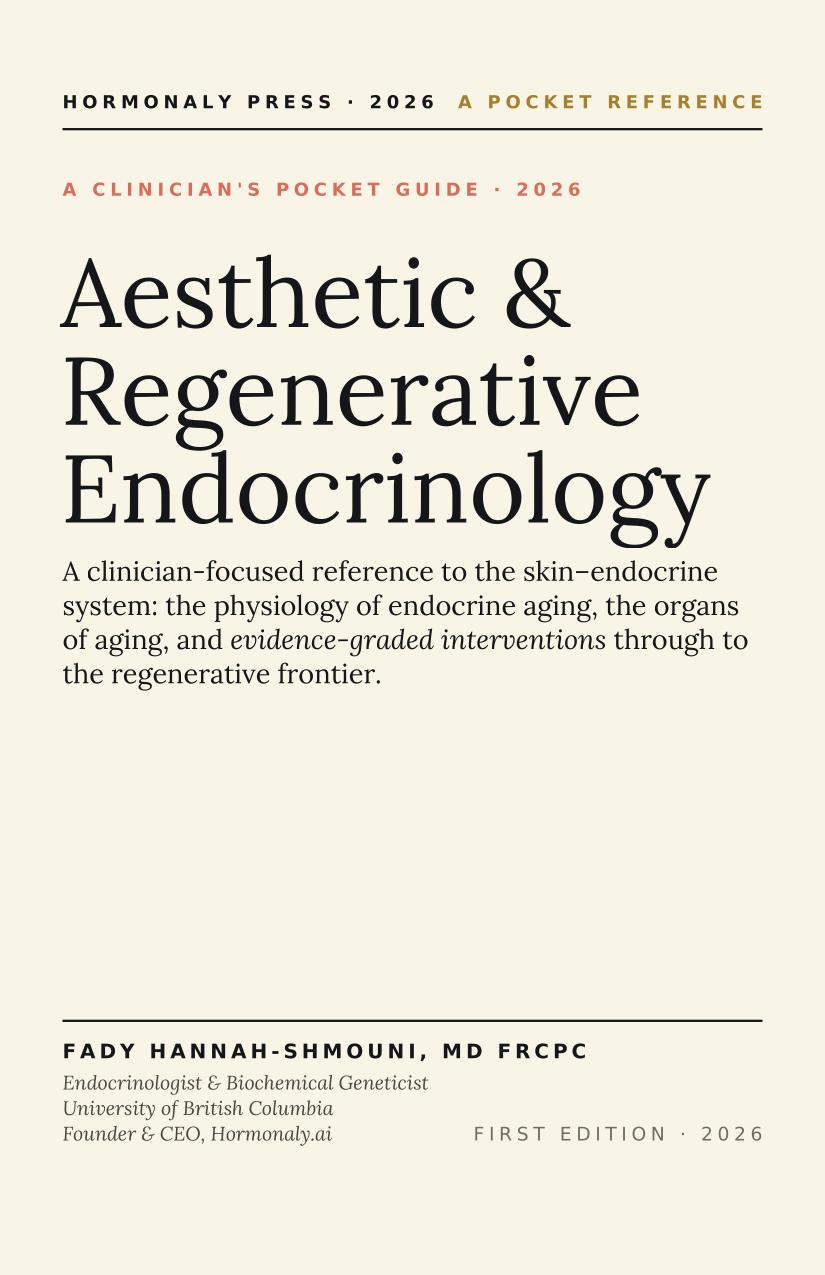
Aesthetic & Regenerative Endocrinology
Fady Hannah-Shmouni, MD FRCPC
 Free sample
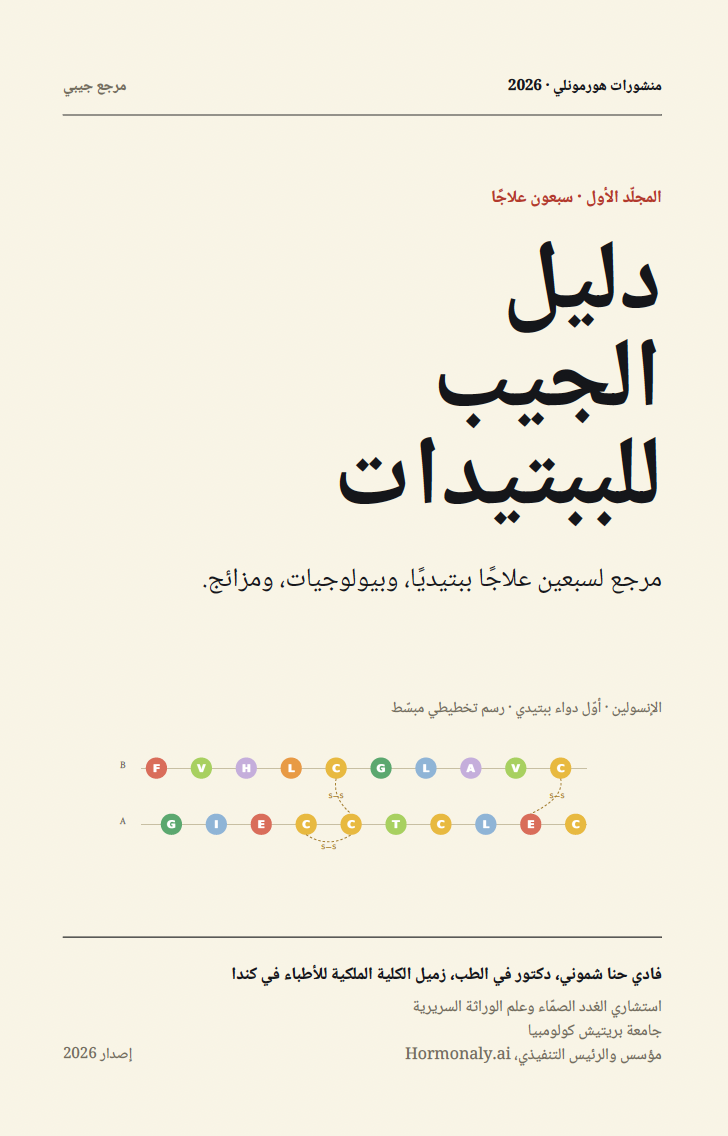
دليل الجيب للببتيدات (The Peptide Pocket Guide — Arabic Edition)
Fady Hannah-Shmouni, MD FRCPC
 Free sample
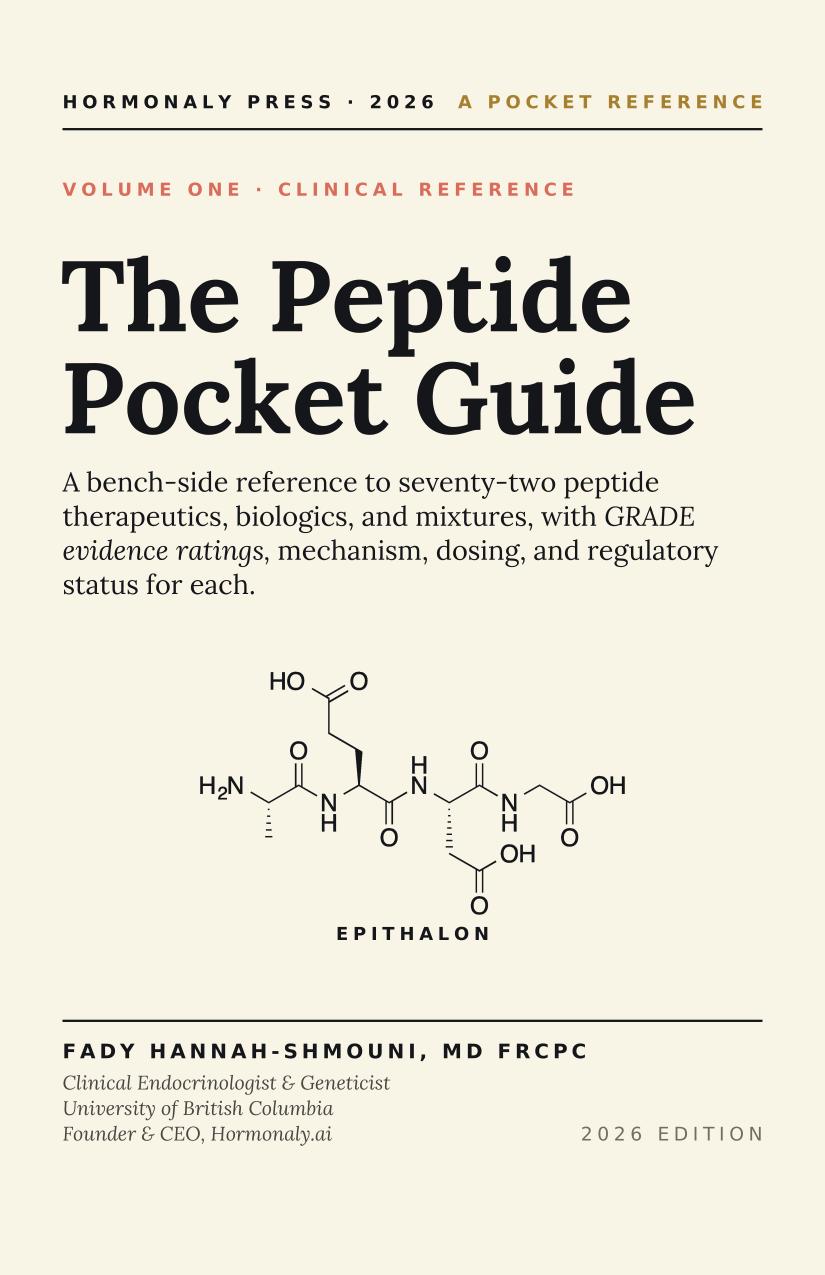
The Peptide Pocket Guide
Fady Hannah-Shmouni, MD FRCPC