BPC-157 and the Evidence: What We Actually Know
Few peptides generate as much enthusiasm as BPC-157. It is described as a 'body protection compound' and is widely discussed for tissue repair, gut health, and tendon recovery. Enthusiasm, though, is not the same as evidence — so let's separate what is genuinely promising from what remains unproven.
What BPC-157 is
BPC-157 is a synthetic peptide derived from a sequence found in human gastric juice. In laboratory and animal studies it has shown effects on wound healing, blood-vessel formation, and the protection of various tissues. Those mechanisms are the basis for almost every claim you will encounter.
What the research actually supports
The strongest signals for BPC-157 come from preclinical work — cell cultures and animal models. In those settings, researchers have repeatedly observed faster healing of tendons, muscle, and the gut lining. They have also seen effects on angiogenesis — the growth of new blood vessels.
- Promising preclinical data on tendon, ligament, and muscle healing.
- Animal evidence for protection of the gastrointestinal lining.
- Proposed mechanisms involving new blood-vessel formation and growth-factor pathways.
Where the evidence stops
Here is the part that responsible coverage cannot skip: robust human clinical trials are largely missing. Most of what is marketed about BPC-157 extrapolates from animals to people — a leap that often does not hold. Dosing and long-term safety are unresolved. The peptide is not an approved medicine in any major jurisdiction.
Promising in animals is a reason to keep studying a compound — not a reason to assume the same result in humans.
Questions worth asking
- Is there a published human trial for the specific use being claimed?
- What is known about safety over weeks and months, not just days?
- What is the regulatory and legal status where you live?
- Who benefits financially from the claim you are reading?
The mechanisms, briefly explained
Why would a fragment of a gastric protein affect tendon healing at all? The proposed answer centres on blood supply. In animal models, BPC-157 promotes angiogenesis — the growth of new small blood vessels — partly through VEGF signalling, and upregulates growth-factor pathways involved in tissue repair. Tendons heal slowly because they are poorly vascularised; a molecule that improves local blood supply is a plausible candidate. A plausible mechanism, though, is where an evidence story begins — not where it ends.
The gut connection
BPC-157 was originally isolated from gastric juice, and its most consistent animal data involves the gut: protection against NSAID-type injury, effects on colitis models, and influence on the gut–brain axis. This explains why the same compound interests two very different communities — athletes pursuing tendon recovery and patients exploring gut health. In both communities, the claims often outrun the evidence.
Sourcing and safety: the part most coverage skips
Because BPC-157 is not an approved medicine, there is no regulated supply chain. Products sold online as 'research chemicals' are not manufactured to drug standards. Independent testing of gray-market peptides has repeatedly found problems with identity, purity, and sterility — a genuine risk for anything injected. 'No reported harms' reflects the absence of systematic safety monitoring, not demonstrated safety. Athletes should also know that BPC-157 falls under WADA's prohibited non-approved substances category.
The bottom line
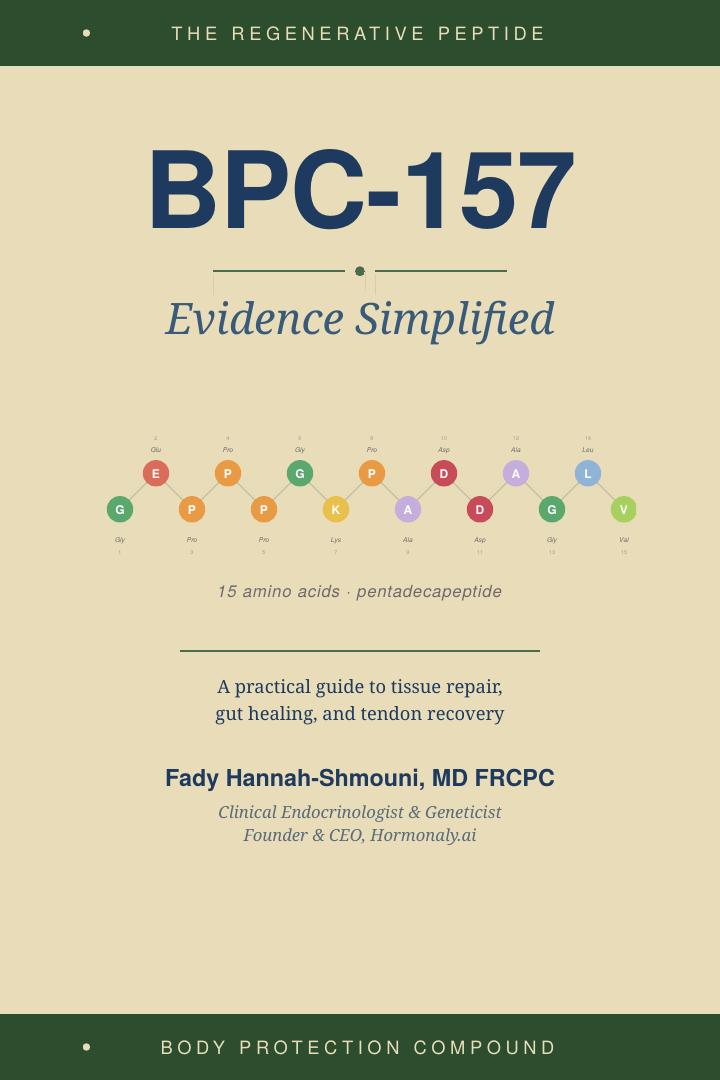
BPC-157 is genuinely interesting — but the honest summary is 'promising preclinical data, limited human evidence.' Our dedicated guide walks through that evidence in plain language. It spells out both the mechanisms and the gaps.
This article is for general education and is not medical advice. Speak with a qualified healthcare professional before making decisions about your health, medications, or supplements.